Liz Echols Liz Echols

Scheurebe: Grape of the Month, April 2026

Pronunciation: “SHOY-ray-beh”…

Even sommeliers in the U.S. will pronounce this many different ways. Confidence matters more than perfection here.

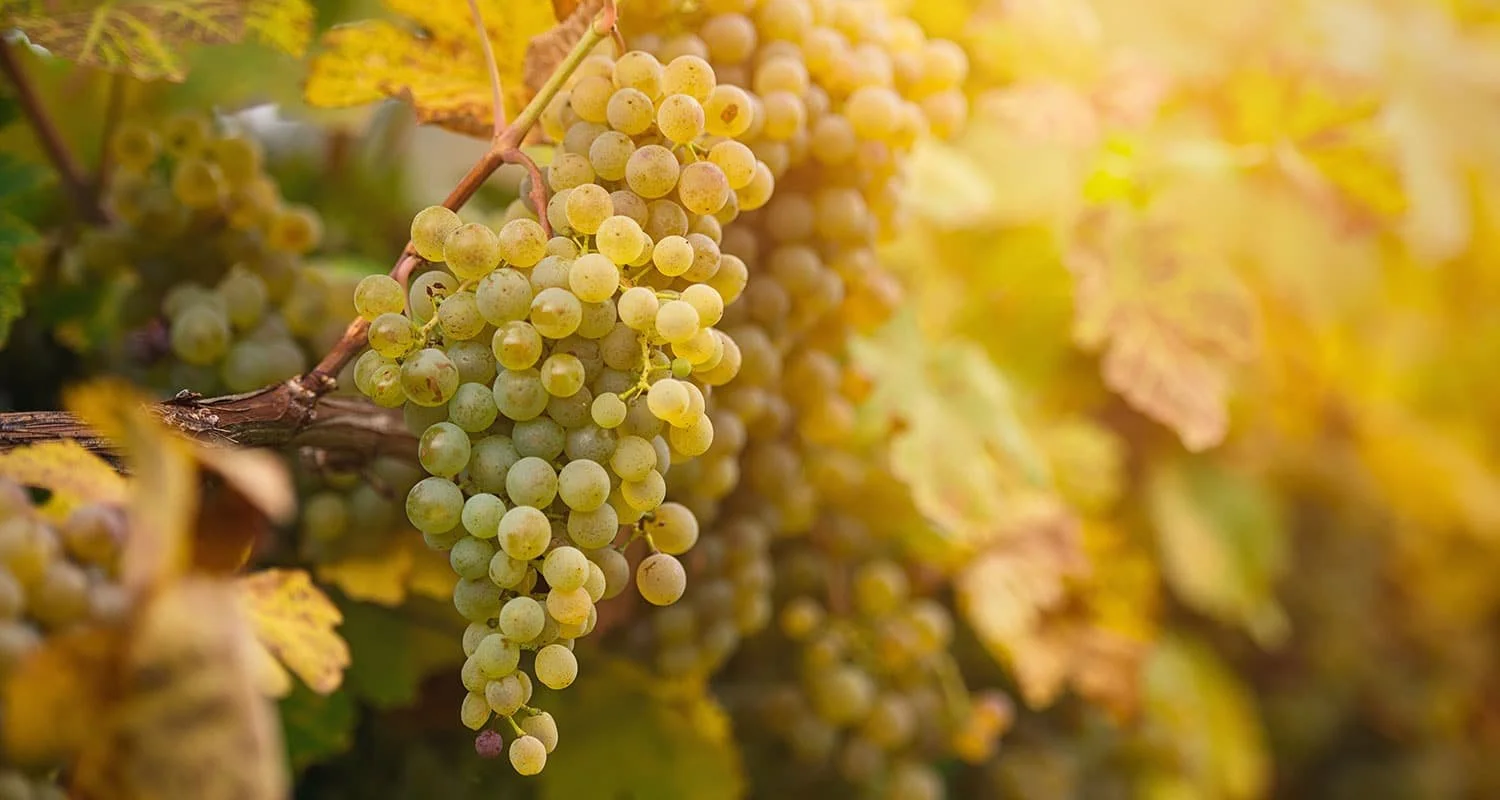
Geolina163 + 1971markus, CC BY-SA 4.0, via Wikimedia Commons

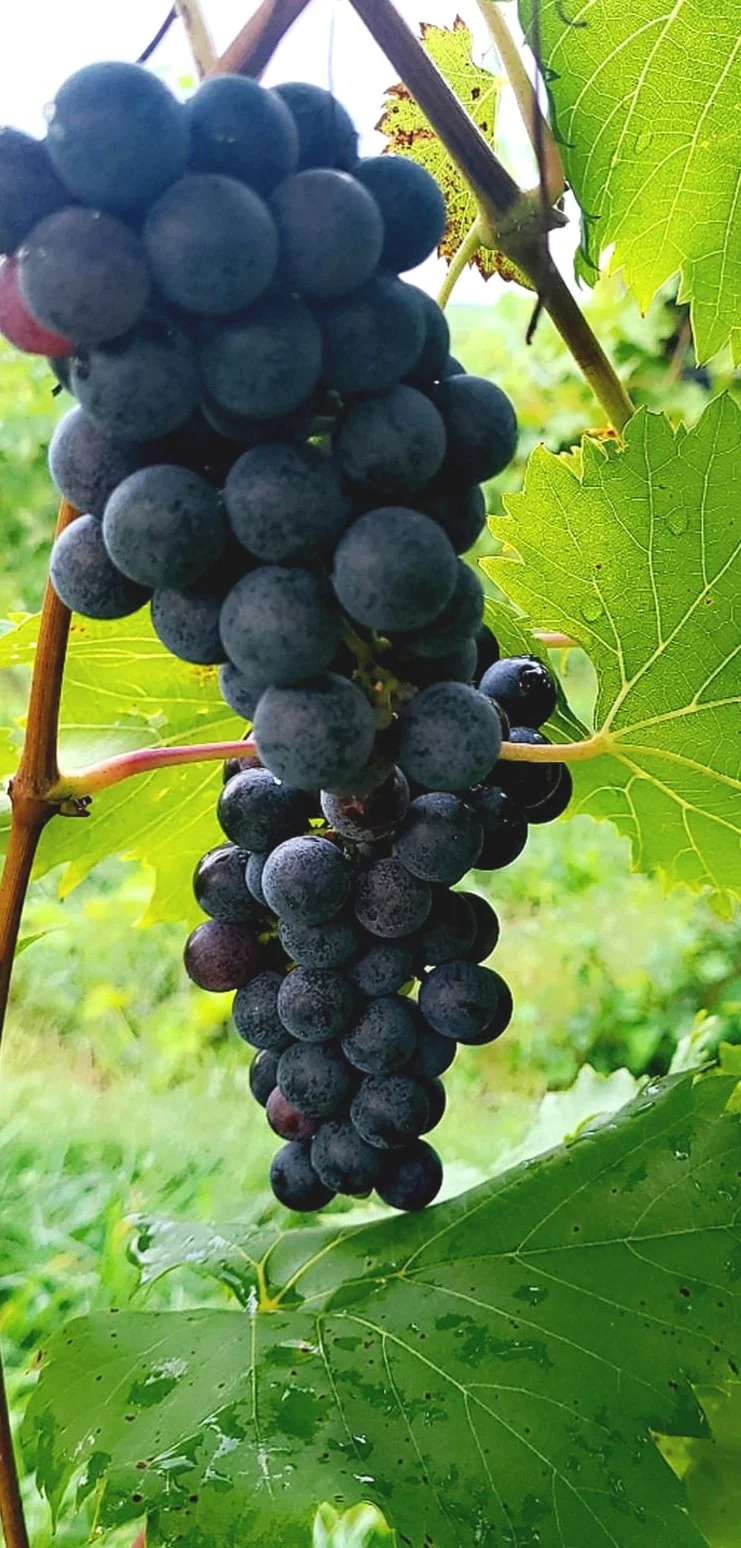
Geolina163 + 1971markus, CC BY-SA 4.0, via Wikimedia Commons

I first heard of Scheurebe last year while visiting the vineyard where I purchased the Sauvignon Blanc grapes for Psyche 2025. As we walked the rows and talked fruit, the name came up in conversation, and I remember immediately being intrigued. It was one of those moments wine so often gives you—a reminder that no matter how much you learn, there is always another grape, another story, another path to explore.

Scheurebe was developed in Germany in the early 20th century by Dr. Georg Scheu, who set out to create an improved version of Silvaner. He wanted a grape with stronger aromatics along with greater resistance to frost and chlorosis. For many years, Scheurebe was believed to be a crossing of Riesling and Silvaner, but later genetic research from Austria confirmed its true parentage as Riesling and Bukettraube, also known as Bouquet Blanc.

Bocksbeutel

Within the European Union, the distinctive Bocksbeutel bottle shape is legally protected, making it one of the few wine bottles recognized and preserved as a regional hallmark.

In Germany, Scheurebe is grown in virtually every wine region, though it is most strongly associated with the Pfalz, Rheinhessen, Nahe, and Franken regions. It has also found an important home in Burgenland in Austria, where warm days and cool nights help preserve freshness while building ripeness. In Franken, it is sometimes bottled in the region’s iconic flattened Bocksbeutel bottle. A cheeky bit of wine lore says the bottle’s shape was inspired by the scrotum of a billy goat, giving the vessel one of the more unforgettable origin stories in the wine world.

What makes Scheurebe so memorable is its personality in the glass. It often shows expressive aromas of grapefruit, dark fruits, stonefruit, tropical fruit, gooseberry, and sage. It is especially known for displaying blackcurrant notes—an aroma remarkably uncommon in white wine and one that has become a signature of the variety.

“If Riesling expresses all that is noble and good, Scheurebe offers all that is dirty and fun.”

– Terry Thiese

Scheurebe is also renowned for producing high-quality wines in both dry and sweet styles. Dry examples are often labeled trocken, meaning dry, and are usually made from fruit harvested before full ripeness, as fully ripe berries tend to develop enough sugar to elevate alcohol and disrupt the balance of the wine if fermented completely dry. If picked too early, however, the grapefruit character can become aggressive—sharp, pungent, and unpleasant.

For this reason, the grape often reaches its highest expression in Germany’s sweeter Prädikat categories, which classify wines by grape ripeness at harvest. Styles such as Spätlese (late harvest) and Auslese (selected harvest) allow Scheurebe’s naturally high acidity and elevated sugar levels to create balance, preventing the wine from feeling cloying. Superior sweet examples, such as Beerenauslese (BA), made from individually selected overripe berries, or Trockenbeerenauslese (TBA), produced from intensely shriveled, concentrated grapes, are often influenced by noble rot, adding layers of dried apricot, honey, and spice.

Scheurebe may not have the widespread recognition of Riesling or Sauvignon Blanc, but that is part of its charm. It rewards curiosity and offers something distinctive for those willing to step outside their comfort zone. Some of the most rewarding experiences in wine, and life as a whole, come from stepping beyond the familiar and giving something lesser known a chance. For me, it will always bring me back to that vineyard visit, and the overwhelming excitement of purchasing my first grapes and working with a winery not simply as a patron, but as a fellow winery beginning its own journey.

A few notable Scheurebe styles to explore, and what to pair them with:

  1. Scheurebe Trocken

    Crisp, aromatic, vibrant acidity with citrus and herbal notes

    Pair with shrimp tacos, fried chicken with hot honey, citrus-dressed salads w/ goat cheese

  2. Scheurebe Spätlese

    Noticeable sweetness balanced by bright acidity and expressive fruit

    Pair with spicy thai curry, jalapeño cornbread, pork banh mi

  3. Scheurebe Auslese

    Richer texture, deeper fruit concentration & honeyed character

    Pair with roasted carrots with harissa yogurt, glazed roast pork, peach cobbler

  4. Scheurebe Beerenauslese (BA)

    Lusciously sweet and intense

    Pair with crème brûlée, candied nuts, tarte tatin

  5. Scheurebe Trockenbeerenauslese (TBA)

Exceptionally rich, rare, and decadent

Pair with baklava, salted caramel desserts, or enjoy slowly on its own

Read More
Liz Echols Liz Echols

The Quiet Weight of Beginning

There’s a strange kind of silence that comes before something begins - in the space between dreaming and doing. It’s almost like a hum - of hope and fear, all at once. It’s filled with questions that sound a lot like doubt.

What if I’m not ready?

What if I’m not good enough?

What if I fail?

These thoughts have followed me with every step I have taken to get to where I am today. They arrive in quiet moments - when the house is still, when the work feels bigger than me, when excitement fades and the reality of creation sets in - the work, the waiting, the uncertainty.

It’s easy to mistake fear for a sign that you shouldn’t continue. But I’ve started to see it differently. Fear doesn’t always signal danger. Sometimes, it’s just the body’s way of recognizing meaning - of saying, this matters.

To create something honest, you have to walk straight through that space between what you know and what you don’t, and that space never feels comfortable. It’s vulnerable to put yourself out there - to show your heart, to say this is me and let the world see it. There is so much risk in that kind of openness. But there is also deep beauty in the act itself - in daring to be seen, in letting your dreams take shape outside of you.

So, I keep going. Even when it feels too big, too uncertain. I take the next small step, then the one after that. I remind myself that courage isn’t the absence of fear - it’s the decision to move with it, to make space for it alongside hope.

Because the truth is, every beginning feels impossible until it doesn’t. And the only way through that uneasy silence - that weight- is to begin anyway. Maybe that’s what all beginnings really are: a series of uncertain steps, stitched together by hope.

I’ll keep weaving it all together - the doubt, the hope, the care - one imperfect thread at a time.

Read More
Liz Echols Liz Echols

Chambourcin: Grape of the Month, June 2025

Take a brief peek into the world of Chambourcin— and my experience with it in the beginning of my wine career.

When I started my wine journey in Maryland back in 2022 at Linganore Winecellars, Chambourcin was one of the first grapes I got to know up close. At the time, I assumed everyone in wine was familiar with it— after all, it was everywhere in my early cellar days. But when I moved to the Willamette Valley, I quickly realized that wasn’t the case. To my surprise, many people had never even heard of it. So today, I’m taking a moment to celebrate this under-the-radar grape that shaped the beginning of my path in wine.

Chambourcin is a truly distinctive grape, especially well-suited to humid climates thanks to its strong resistance to mildew—particularly the dreaded downy mildew that plagues vineyards throughout the eastern U.S. all season long. This natural resilience makes it an excellent choice for growers in that region. It’s also impressively cold-hardy, thriving in northern states and even into Canada. Despite its success in North America, Chambourcin’s roots trace back to France. It was developed in the Loire Valley in the 1960s by French biochemist Joannes Seyve, who also bred the hybrid variety Traminette—another favorite in eastern vineyards. While the exact parentage of Chambourcin remains somewhat mysterious, genetic research shows it includes North American Vitis species in its lineage, which explains its adaptability across a range of challenging climates.

Chambourcin is a teinturier grape, meaning its juice is naturally red or pink, rather than the usual clear juice found in most red grapes. When this richly pigmented juice is fermented with the skins, it produces wines with strikingly deep, saturated color. Because of this, Chambourcin is often used in blends to add intensity and depth. At Linganore Winecellars in Maryland, we worked with Chambourcin both as a single varietal and as a blending component, crafting everything from dry reds to sweeter styles. During my time making wine in Maryland, this grape was central to everything I was learning. Chambourcin will always have a special place in my heart—it’s where my foundation in winemaking truly began.

While Chambourcin may not have the name recognition of Pinot Noir or Cabernet Sauvignon, its resilience, versatility, and deep character make it a gem, especially for regions like the East Coast that face unique growing challenges. For me, it’s more than just a grape; it’s a symbol of where I started and how far I’ve come. Wherever my wine journey takes me, I’ll always be grateful to Chambourcin for being there at the beginning, teaching me lessons about winemaking, patience, and place.

A few notable Chambourcin wines to check out, and what to pair them with:

  1. Aperture 2023- Linganore Winecellars

    100% Chambourcin. Dry, full-bodied, aged 100% in French oak barrels

    Pair with aged cheddar, grilled pork chops, twice-baked potatoes

  2. Steeplechase- Linganore Winecellars

    Chambourcin blend. Sweet

    Pair with kettle chips, fresh berries, chocolate

  3. Chambourcin Merlot- Boordy Vineyards

    Chambourcin & Merlot blend. Sweet, medium-bodied, aged in stainless steel

    Pair with grilled chicken, salad with goat cheese & honey-balsamic dressing

Read More